Why Most Tradie Google Ads Campaigns Waste Half the Budget
Google Ads works for tradies — when it's set up correctly. The problem is most tradie Google Ads campaigns are set up by someone who knows Google Ads but not trade businesses, or by the tradie themselves following generic advice. Here's what actually makes the difference between a profitable campaign and a budget furnace.

Why most tradie Google Ads campaigns waste half the budget
The correct setup for a tradie Google Ads campaign
Should a tradie DIY Google Ads or use an agency?
DIY: Possible, but Google Ads has a steep learning curve. The platform is designed to spend your money — smart bidding, broad match, and Performance Max campaigns default to settings that benefit Google's revenue more than yours. If you DIY, invest time in learning the platform properly before turning on campaigns.
Agency: A good trade-specialist Google Ads agency charges $500–$1,500/month management fee and can typically deliver a better-performing campaign than DIY. The risk: many agencies are volume-focused and don't understand trade businesses specifically. Ask for case studies from tradie clients in your trade category before signing. Also ask: "What's my current target CPA and how do you measure it?" If they can't answer clearly, walk away.
Before Google Ads: make sure Google LSA and your Business Profile are running.
Google Local Services Ads are simpler, often cheaper per lead, and should be live before you run traditional Google Ads. Get both working for maximum search coverage. See our Google LSA setup guide.
Read the Google LSA Guide →Frequently Asked Questions
In major Australian cities (Sydney, Melbourne, Brisbane), a minimum of $50–$100/day ($1,500–$3,000/month) is needed for meaningful volume and data. Lower budgets spread too thin to generate enough data to optimise the campaign. In regional areas and smaller cities, $30–$50/day can be sufficient. Campaigns need at least 30–60 days of data before meaningful optimisation is possible — don't judge performance in the first two weeks.
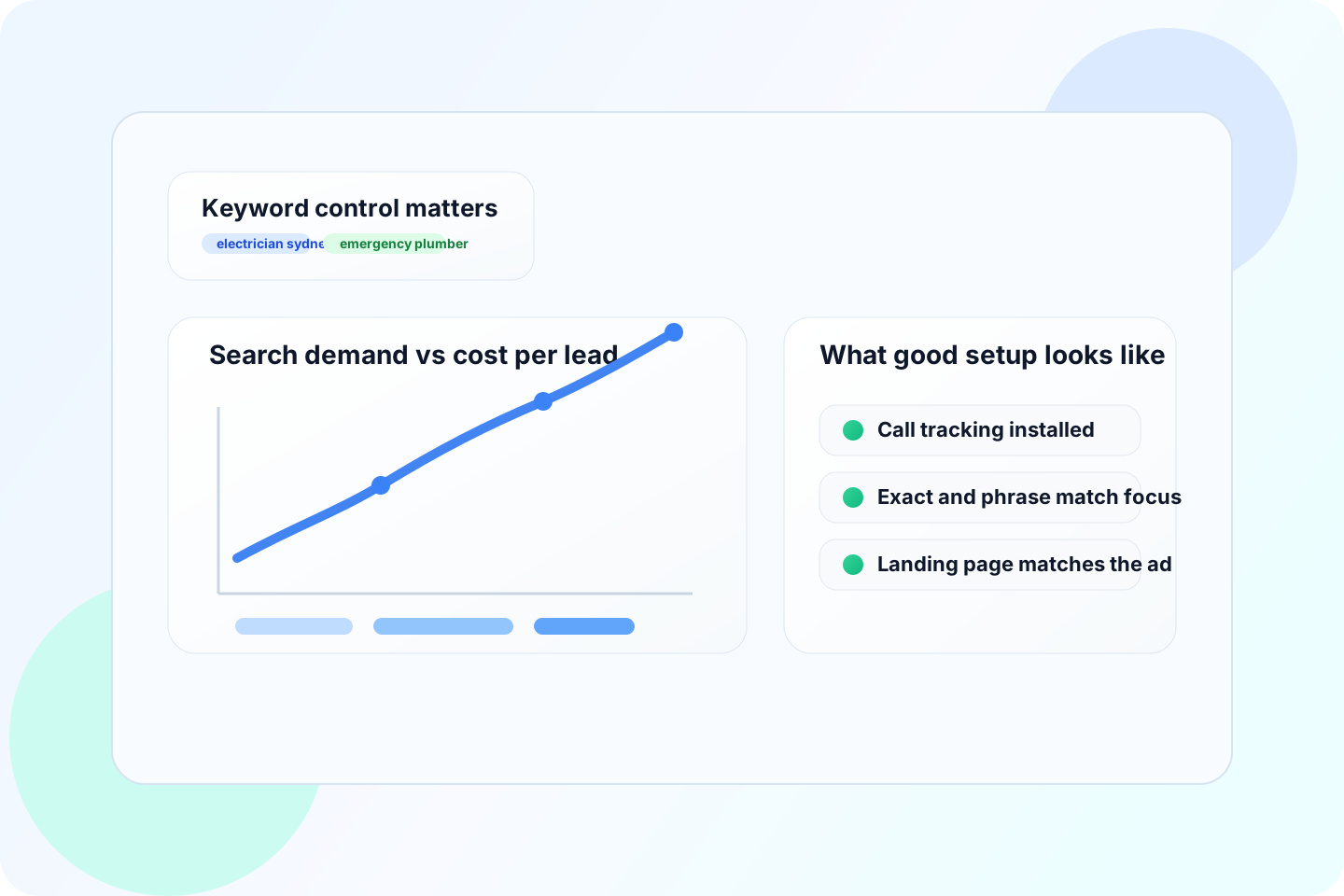
Specific service + location combinations work best: "emergency plumber Sydney", "electrician Parramatta", "air conditioning service Melbourne". Use phrase match or exact match — avoid broad match which wastes budget. Build a negative keyword list from day one: exclude "jobs", "career", "how to", "DIY", "training", "course", "apprentice" and other non-buyer terms. Start with 10–15 tight keywords rather than 100 broad ones.
Google Local Services Ads (LSA) are simpler, often cheaper per lead, and should be set up first. They come with the Google Guaranteed badge and the caller is contacting you specifically. Traditional Google Ads give more control and reach — better for specific high-value service keywords or experienced advertisers. Running both simultaneously is the optimal setup for tradies with a meaningful marketing budget.
Most common reasons: broad match keywords wasting budget on irrelevant searches, no negative keyword list, landing page doesn't match the ad, no call tracking (can't measure real conversions), budget too low to be competitive in your market, or campaign paused before enough data collected. The fix: exact/phrase match keywords, comprehensive negative keywords, dedicated landing pages per service, call tracking from day one, and sufficient budget for at least 30 days.